Educational illustration · Read the evidence and limitations below.
What is PNC-28?
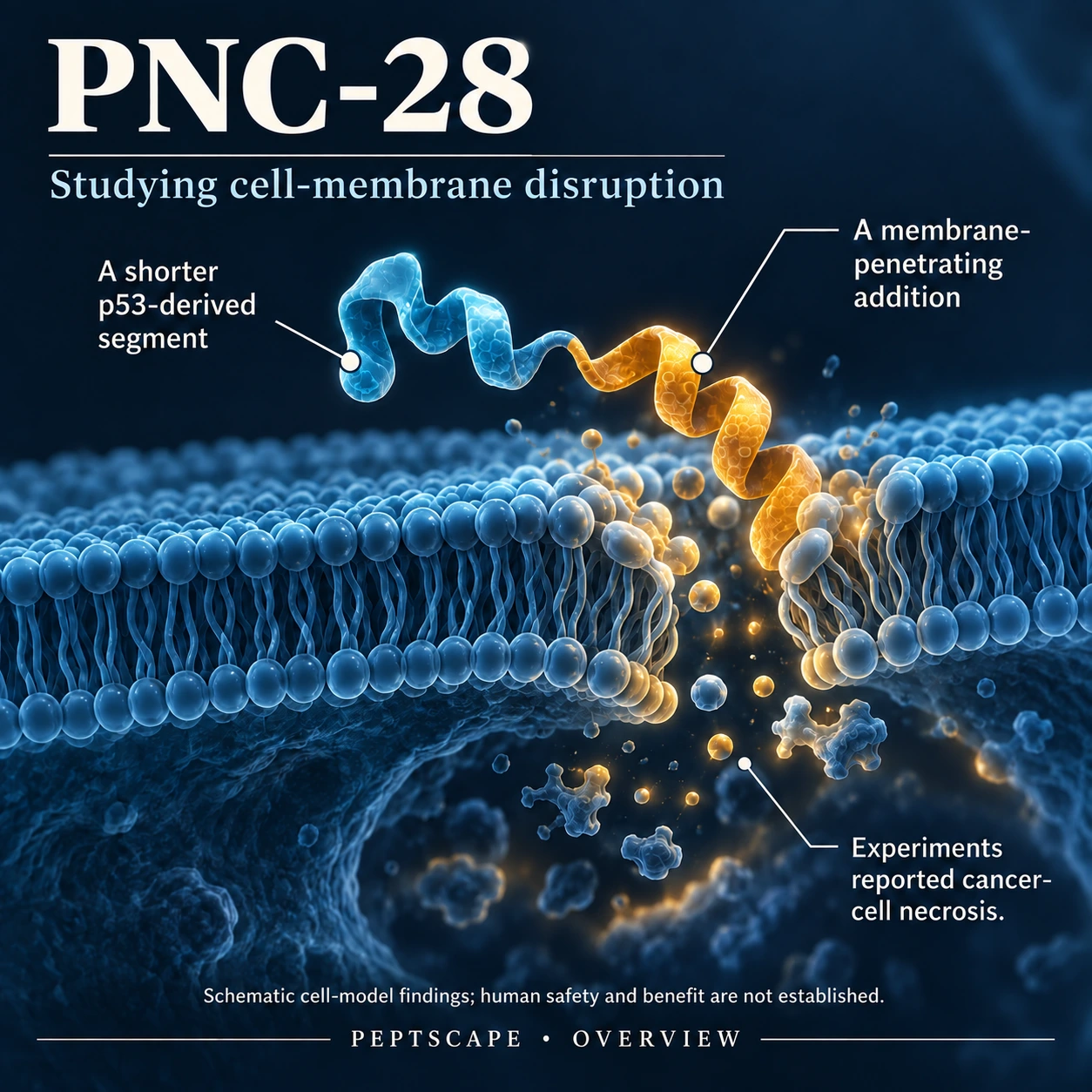
PNC-28 is an experimental p53-related peptide linked to a cell-penetrating sequence. It differs in structure from PNC-27, even though the two are often grouped in anticancer-peptide discussions. The exact peptide must be identified before a research result is applied to it.
The wider picture
Cancer treatments need to distinguish tumour cells from healthy tissue while reaching the relevant location in the body. Killing cancer cells in a dish is one part of that problem. Delivery, breakdown, effects on normal organs and the way a tumour changes over time all influence whether a proposed treatment can help a person.
Tumours are not uniform collections of identical cells. Different regions and cell populations can respond differently to a proposed target. A compound with activity in one cancer model may not have the same effect in another cancer, even when both are described using the same organ name.
What it is used for
Its intended use concerns tumour control through effects on cancer cells. It is not established as a general cancer treatment or as a preventive supplement. The specific tumour model, delivery and effects on normal tissues are important to interpreting the research, and should not be replaced by a broad claim that the peptide recognises all cancer.
Understanding the intended benefit
The aim of an experimental anticancer peptide may be to interrupt a growth signal, affect the tumour's blood supply or damage its membrane. Those are different strategies. A temporary change in a scan or blood marker also needs to be separated from outcomes such as symptoms, survival and treatment toxicity. Cancer type, stage and prior treatment strongly affect how a result should be interpreted.
An early treatment study often concentrates on tolerability and how a compound behaves in the body. Those are necessary questions but differ from establishing survival benefit or a reliable tumour response. Stable disease can be meaningful in context, yet an uncontrolled observation cannot tell us on its own how much the experimental treatment contributed.
How it works
The linked sequence is intended to influence access to cell membranes and related targets. That delivery concept is only one part of a treatment strategy. A result for PNC-27 cannot establish the dose, safety or effectiveness of PNC-28, and the presence of a p53-derived segment does not recreate all the functions of the full protein.
The biology in plain language
Experimental anticancer compounds should not replace a treatment plan selected for a diagnosed cancer. They can introduce toxicity or interfere with care even when they are described as targeted. The Medical material provides the setting of the source findings. No self-directed preparation or injection instructions can resolve the missing information about effective delivery, organ safety and interaction with an individual's cancer treatment.
Supportive nutrition and symptom management remain important during cancer care, but they are not substitutes for a cancer-specific plan. Unregulated combinations may also interfere with established treatment or obscure the cause of a new symptom. Any proposed experimental peptide needs to be discussed with the treating oncology team using its exact identity, route and source evidence.