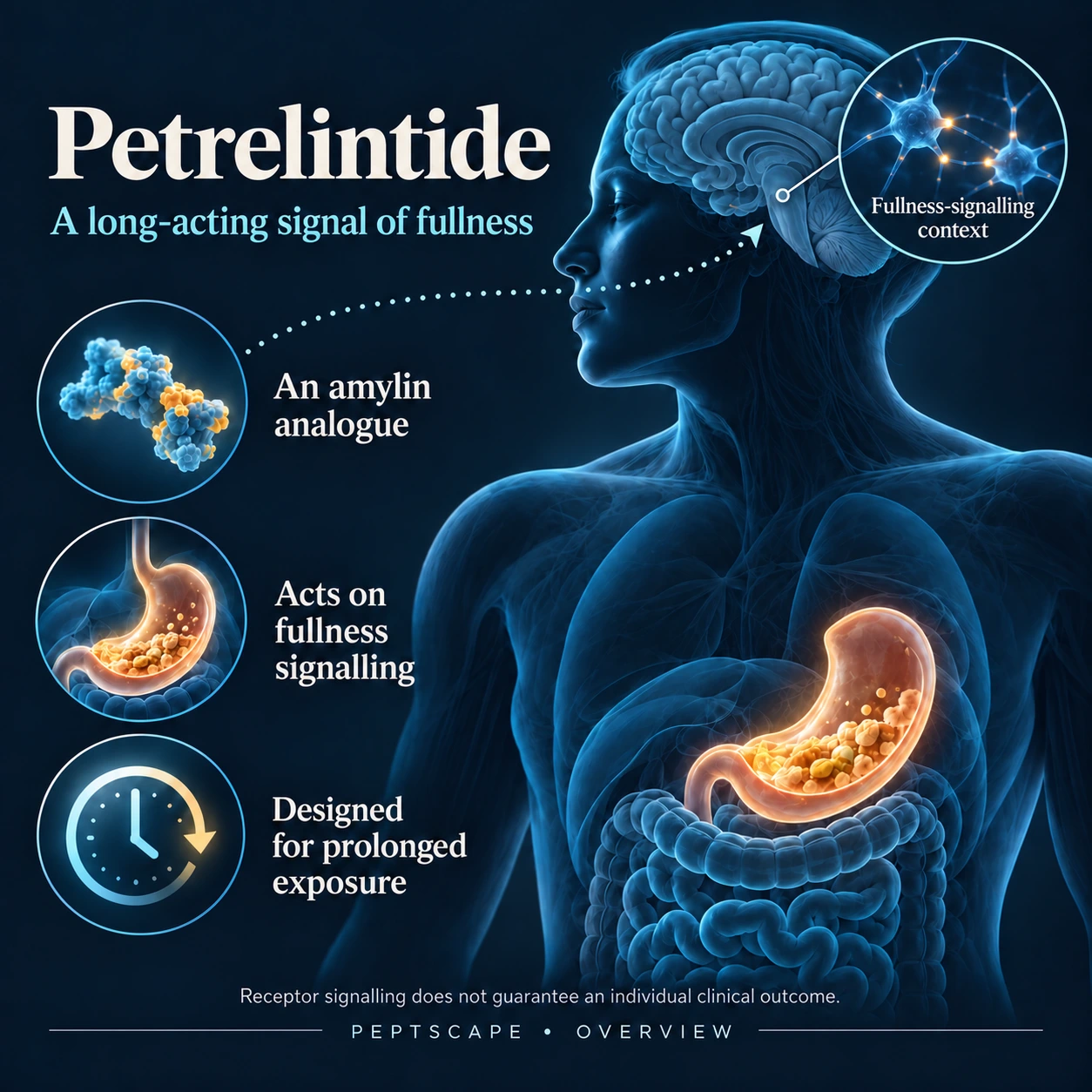
Educational illustration · Read the evidence and limitations below.
What is Petrelintide?
Petrelintide is a long-acting amylin analogue developed for weight management. It is intended to reproduce useful parts of the meal-related amylin signal while changing how long the molecule remains active. It is not cagrilintide or pramlintide under another name.
The wider picture
Amylin is a meal-related hormone normally released alongside insulin. Insulin helps the body use and store glucose; amylin contributes to fullness, stomach emptying and the coordination of glucose entering the circulation after food. These are connected but distinct jobs. A peptide based on amylin is therefore not another name for insulin and is not automatically a substitute for a GLP-1-based treatment.
The pancreas normally releases several signals around meals. They coordinate the amount of glucose arriving from food with the body's ability to handle it. Replacing or imitating one signal does not reproduce the whole system. Amylin-based treatment is best understood as a particular part of that coordination rather than as a general metabolism accelerator.
What it is used for
Its main goal is appetite regulation and weight reduction. A longer-acting design can change treatment convenience and the time course of unwanted effects, but it does not guarantee better tolerance. Comparisons with GLP-1 medicines need direct evidence rather than relying on the fact that the receptor target is different.
Understanding the intended benefit
The practical aim of appetite regulation is to make an adequate eating pattern easier to maintain. Feeling satisfied earlier should still leave room for nutritious meals and hydration. Record whether changes concern hunger before meals, fullness during meals or cravings between meals. These observations explain more than a single appetite score. Constipation, nausea and difficulty maintaining intake deserve their own attention rather than being interpreted as desirable evidence of greater potency.
A smaller meal and a slower meal are different experiences. Eating speed can affect when fullness is noticed, while the composition of the meal affects both nutrition and comfort. Record whether nausea is preventing intake or whether ordinary portions simply feel sufficient earlier. Those observations distinguish a tolerable appetite effect from a problem that needs review.
How it works
Chemical modification helps extend exposure beyond natural amylin's brief action. Receptor activity and persistence together shape the response. An amylin analogue can influence fullness and meal handling without being insulin; nevertheless, changes in intake remain relevant to anyone using glucose-lowering treatment.
The biology in plain language
Stomach emptying controls how quickly food moves into the intestine. A slower rate can reduce the speed of the rise in blood glucose, but it can also affect how meals and other medicines are tolerated. This is particularly relevant when insulin or other glucose-lowering medicines are involved. A change in eating pattern may alter the balance of an existing treatment plan even when the new peptide does not directly replace any of those medicines.
Changes in appetite can affect people who use insulin even when an amylin analogue is not itself supplying insulin. Less food or delayed delivery of carbohydrate can change the relationship between a meal and a pre-existing insulin dose. That is why glucose monitoring and clinician-directed adjustments matter. The mechanism does not justify independently reducing or increasing another medicine.