Educational illustration · Read the evidence and limitations below.
What is Melanotan I (Afamelanotide)?
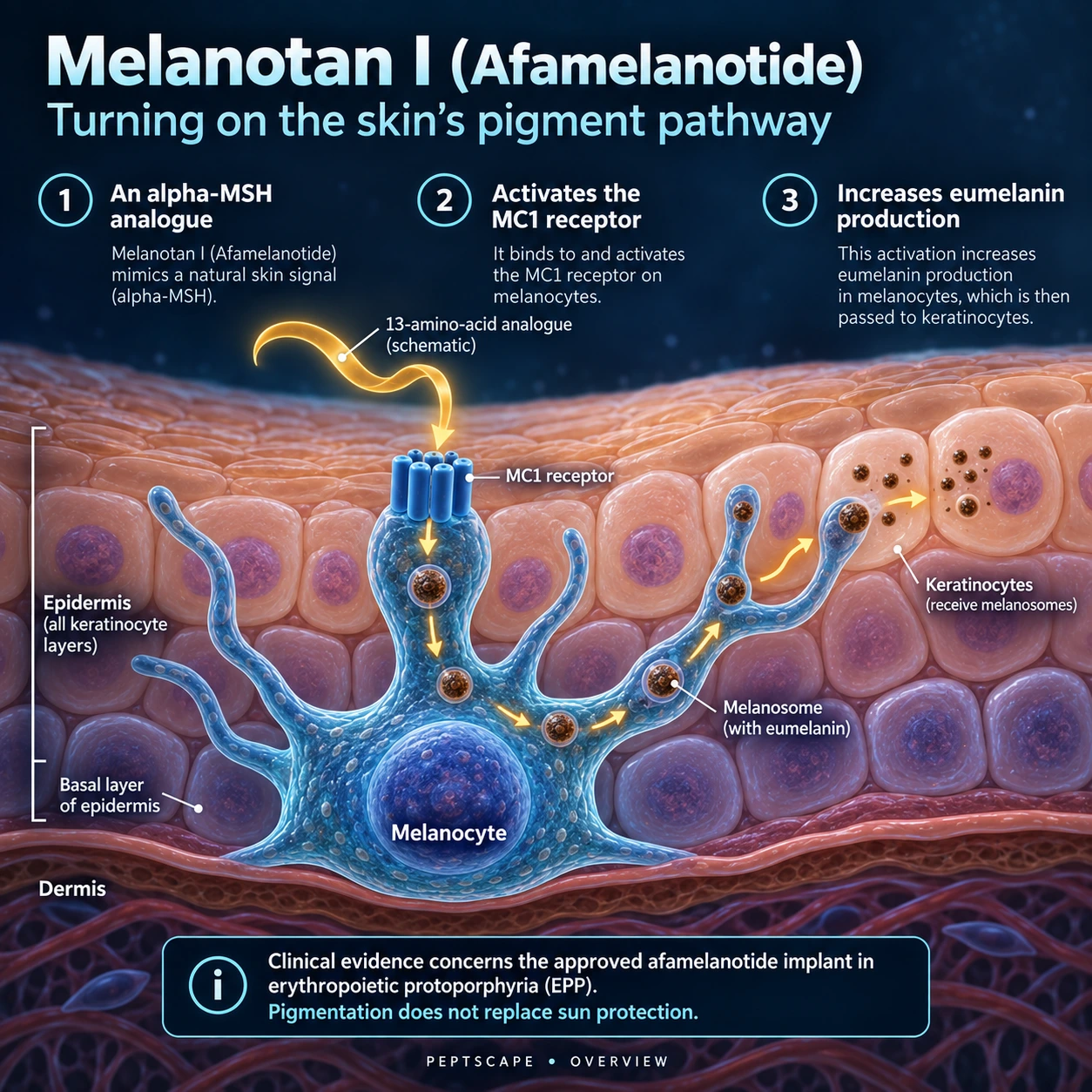
Melanotan I is associated with afamelanotide, an alpha-melanocyte-stimulating-hormone analogue. Its central action is on pigmentation-related signalling. A regulated implant formulation exists for a particular light-sensitivity disorder, but that presentation is not equivalent to a research vial sold for tanning.
The wider picture
Skin pigment is produced by melanocytes, cells that make melanin. Melanin contributes to skin colour and the response to ultraviolet exposure. Producing more pigment is not the same as repairing sun damage or preventing skin cancer. A darker appearance can therefore be misleading if it encourages additional sun exposure or less careful use of protective clothing and sunscreen.
A tan is a visible pigment response, not a test of skin health. The appearance of additional freckles or darker existing lesions should be assessed separately from an overall change in colour. Standardised photographs may help document a change, but a photograph cannot replace examination of a suspicious lesion.
What it is used for
Cosmetic interest centres on increased pigmentation. The medical application in erythropoietic protoporphyria concerns tolerance of light-related symptoms in a specific disease, not an assurance that ordinary users can safely increase ultraviolet exposure. Tanning and treatment of a light-sensitivity disorder must remain clearly separated.
Understanding the intended benefit
Tanning, light sensitivity and sexual effects are different outcomes even when a peptide can influence more than one of them. A treatment developed for a specific light-sensitivity disorder should not be treated as a universal cosmetic tanning treatment. Compare changes in skin colour separately from changes in freckles or individual moles. A changing, bleeding or unusual lesion requires examination rather than being accepted as a routine cosmetic effect.
Sun exposure can cause harm before a person develops visible redness. A pigmentation-related peptide does not provide a reliable licence to extend exposure. Protective clothing, shade and appropriate sunscreen address ultraviolet exposure through a different mechanism from stimulating melanin.
How it works
The peptide activates melanocortin signalling involved in melanin production. The way exposure is delivered matters: a sustained-release implant does not provide the same pattern as a reconstituted injection. Melanotan I and Melanotan II are distinct molecules with different receptor activity, so their amounts and expected effects should not be substituted.
The biology in plain language
Melanocortin receptors occur in several tissues. Different peptides activate different combinations of these receptors, which helps explain why effects can extend beyond pigmentation. Route and formulation also matter: an implant, a nasal preparation and a reconstituted vial do not provide the same exposure just because related names appear on the label. More visible pigmentation does not identify the amount absorbed or establish that unwanted effects are absent.
Melanocortin biology also includes pathways related to appetite and sexual function. An unexpected effect in one of those areas is not proof that a tanning product is correctly identified or appropriately dosed. Changes in blood pressure, persistent nausea or prolonged erections deserve attention on their own terms rather than being folded into a desired cosmetic response.