Educational illustration · Read the evidence and limitations below.
What is P140?
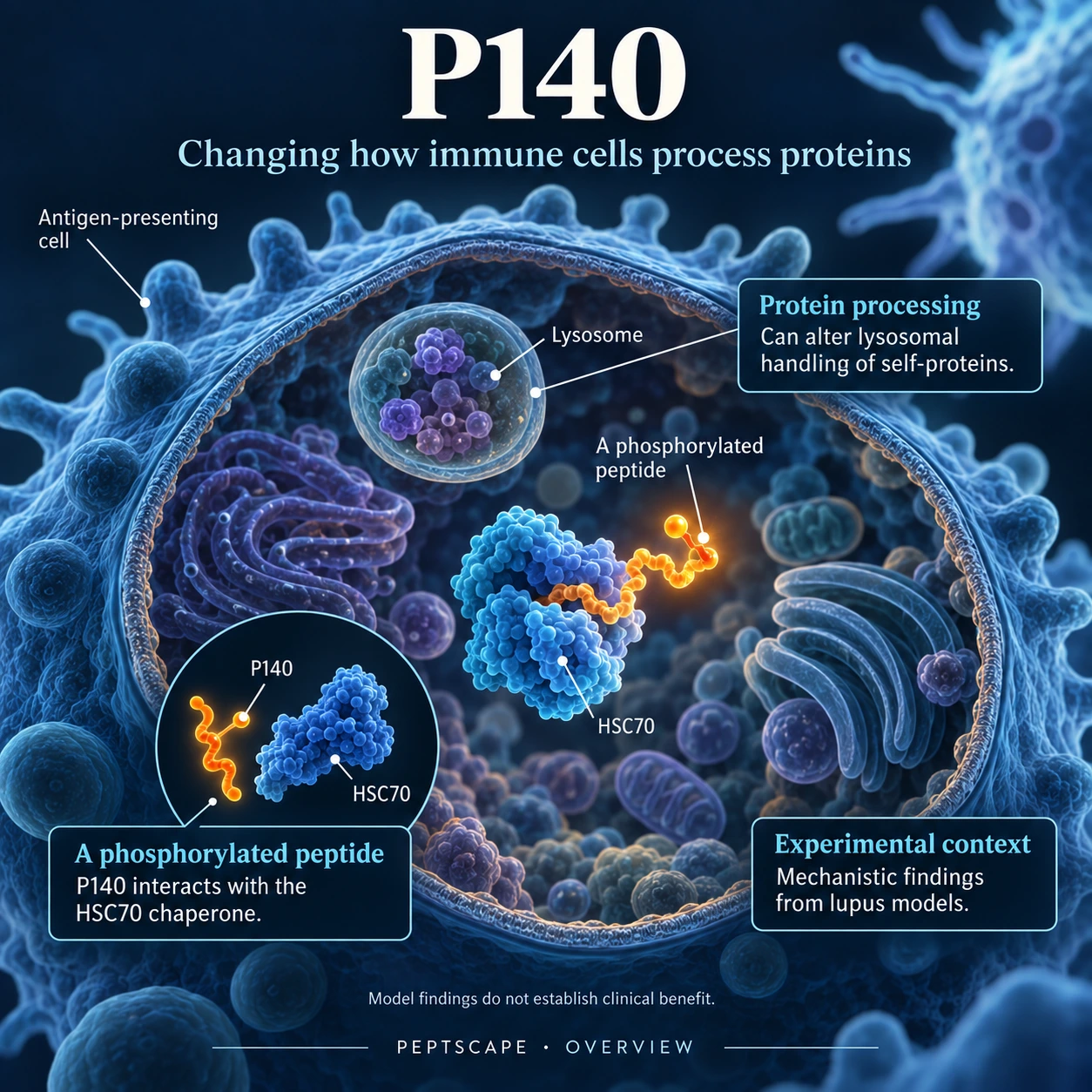
P140 is a phosphorylated peptide developed from part of a protein involved in cellular RNA processing. It has been investigated for modulation of autoimmune activity, particularly in lupus. It is not a general antimicrobial peptide or a supplement intended to raise all immune responses.
The wider picture
The immune system is a coordinated network rather than a single dial that should always be turned up. It recognises threats, communicates between cells, clears damaged material and helps resolve inflammation. Excessive or misdirected activity can also damage healthy tissue. An immune-related peptide needs to be understood by the particular response it influences, rather than described simply as an immune booster.
Inflammation is a response to injury or threat. It helps recruit resources, but it also needs to settle once the problem is controlled. Reducing redness or an inflammatory marker is not always equivalent to eliminating an infection. The cause of the response matters as much as its intensity.
What it is used for
The intended goal is to reduce inappropriate immune activity while preserving useful defence functions. Lupus can affect different organs and has a variable course, so a change in one symptom or marker does not establish control of the whole disease. P140 belongs in the context of specialist autoimmune care rather than replacing established treatment.
Understanding the intended benefit
Infection, autoimmune disease, allergy and wound healing involve different problems. A molecule relevant to one of these does not necessarily help the others. Useful outcomes are also condition-specific: a wound closing, fewer disease flares or a particular symptom improving are not interchangeable with a change in an immune blood marker. Persistent fever, an expanding red wound or worsening breathlessness calls for an assessment of the underlying problem.
An antimicrobial effect and an immune-modulating effect describe different actions. The first concerns an organism directly; the second concerns how the body responds. A peptide may have aspects of both, but that does not make it a replacement for identifying the organism, treating the source of infection or managing an autoimmune disease appropriately.
How it works
Its proposed action involves the way cells process and present material to the immune system, including pathways connected with cellular housekeeping. Phosphorylation adds a specific chemical group that forms part of the peptide's identity. A similarly named unmodified sequence should not be assumed to have the same activity.
The biology in plain language
Immune cells exchange messages through receptors and signalling pathways. Some signals recruit cells, some activate them and others help quiet the response. Dose, timing, route and the condition of the tissue can influence which effects dominate. This is why activity against a microbe in a laboratory does not automatically describe an effective treatment for an infection, and why suppressing an inflammatory signal does not establish that every other immune function is preserved.
Nutritional adequacy supports normal immune function, but megadoses do not reliably turn the system into a stronger defence. Protein, energy and correction of genuine deficiencies serve different purposes from a targeted immune medicine. Existing immunosuppressive treatment, autoimmune disease and a history of serious infection can change the context, so an immune peptide should not be added as a routine wellness extra.