Educational illustration · Read the evidence and limitations below.
What is Glutathione?
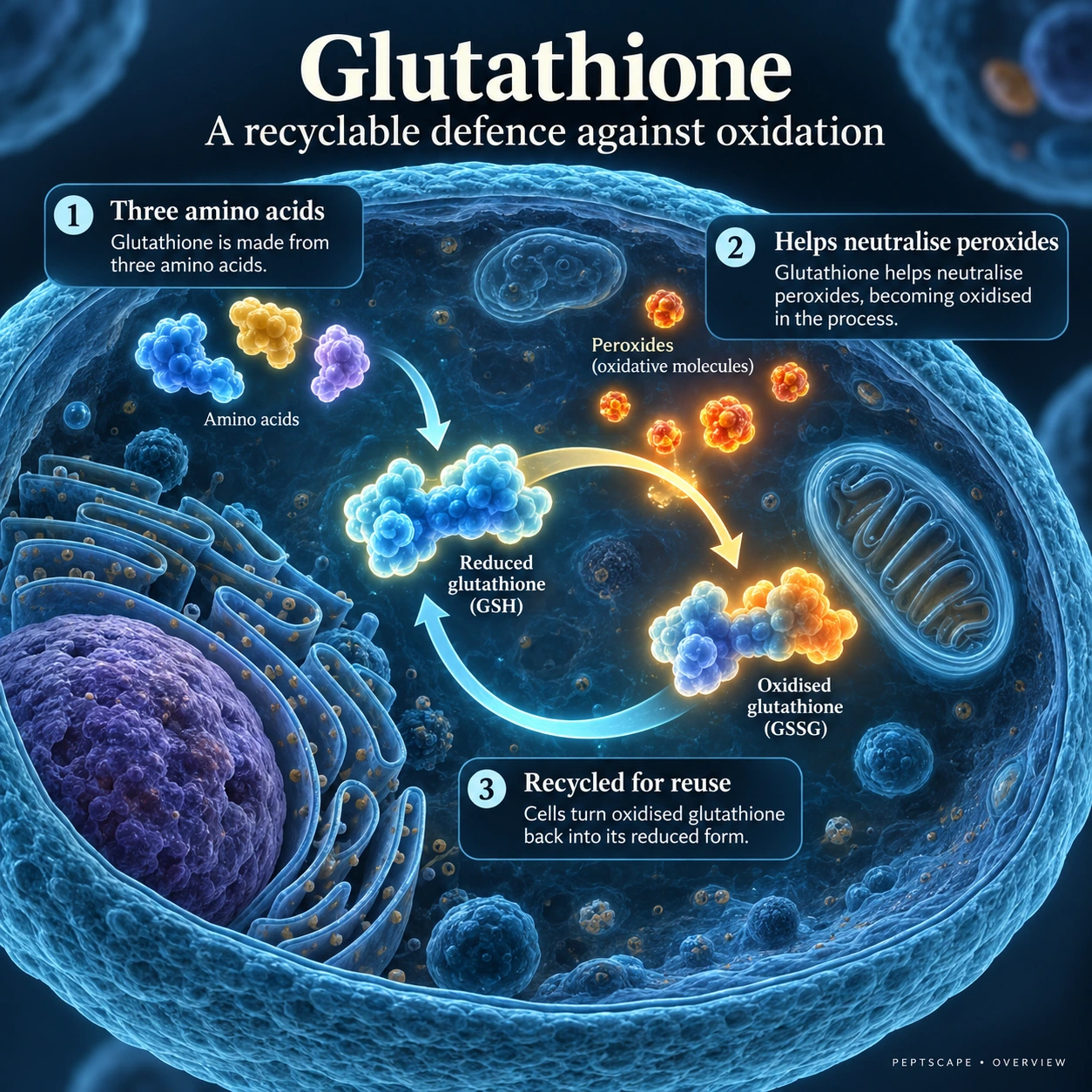
Glutathione is a three-amino-acid molecule made from glutamate, cysteine and glycine. Cells use it in antioxidant systems and in handling certain reactive substances. It is a peptide, but its normal role is mainly cellular chemistry rather than the hormone-like signalling associated with many other entries in this library.
The wider picture
A nutrient can be essential for normal physiology without extra amounts improving health when needs are already met. Deficiency treatment and general wellness supplementation are different uses. Food intake, absorption, illness and medicines all influence whether a person needs replacement. A symptom such as tiredness does not identify which nutrient, if any, is missing.
Absorption begins before a nutrient reaches the blood. Digestion, the condition of the intestine and transport systems all influence uptake. A diagnosed absorption problem may justify a particular route, while a person without that problem may have different options. Route selection should answer a real need rather than assume that an injection is always stronger or better.
What it is used for
Supplement use includes antioxidant support, liver-related discussions and cosmetic skin-lightening claims. These are separate purposes and should not be collapsed into the word detox. Healthy cells need functioning antioxidant systems, but extra glutathione is not proven to improve every symptom attributed to oxidative stress or to safely lighten skin through any route.
Understanding the intended benefit
Start by understanding the purpose of supplementation: correcting a measured deficiency, managing a specific condition or filling a dietary gap. The route should fit that purpose. Oral intake and an injection can have different absorption, concentrations and risks. An injectable presentation is not automatically more beneficial simply because it enters the body by a different route.
A laboratory result needs to be interpreted alongside symptoms, diet and the reason the test was ordered. Some results reflect recent intake; others provide information about stores or functional effects. A change in the number does not always occur on the same timeline as improvement in symptoms, particularly when nerve or tissue recovery is involved.
How it works
Glutathione cycles between reduced and oxidised forms as it participates in chemical reactions. The body also synthesises and recycles it. Oral, liposomal, inhaled and injectable preparations do not provide identical exposure or have identical risks. Supplying more precursor amino acids or antioxidants does not automatically improve this cycle when nutritional needs are already met.
The biology in plain language
Nutrients participate in networks. Adding one does not bypass the need for energy, protein, sleep or treatment of an underlying disorder. Different chemical forms can also have different handling in the body. Record the actual ingredient and amount rather than only a marketing name. Combining several products may duplicate ingredients, and more is not always better: excessive supplementation can create side effects or interfere with other nutrients and medicines.
Combination products can hide duplication. Two supplements with different front-label names may contain the same vitamin or precursor. Keep a record of the full ingredient list and amount from each source. This is especially useful when adding a nutrient alongside peptide use, because the nutrient's purpose and possible adverse effects remain independent of the peptide.