Educational illustration · Read the evidence and limitations below.
What is GHRP-2?
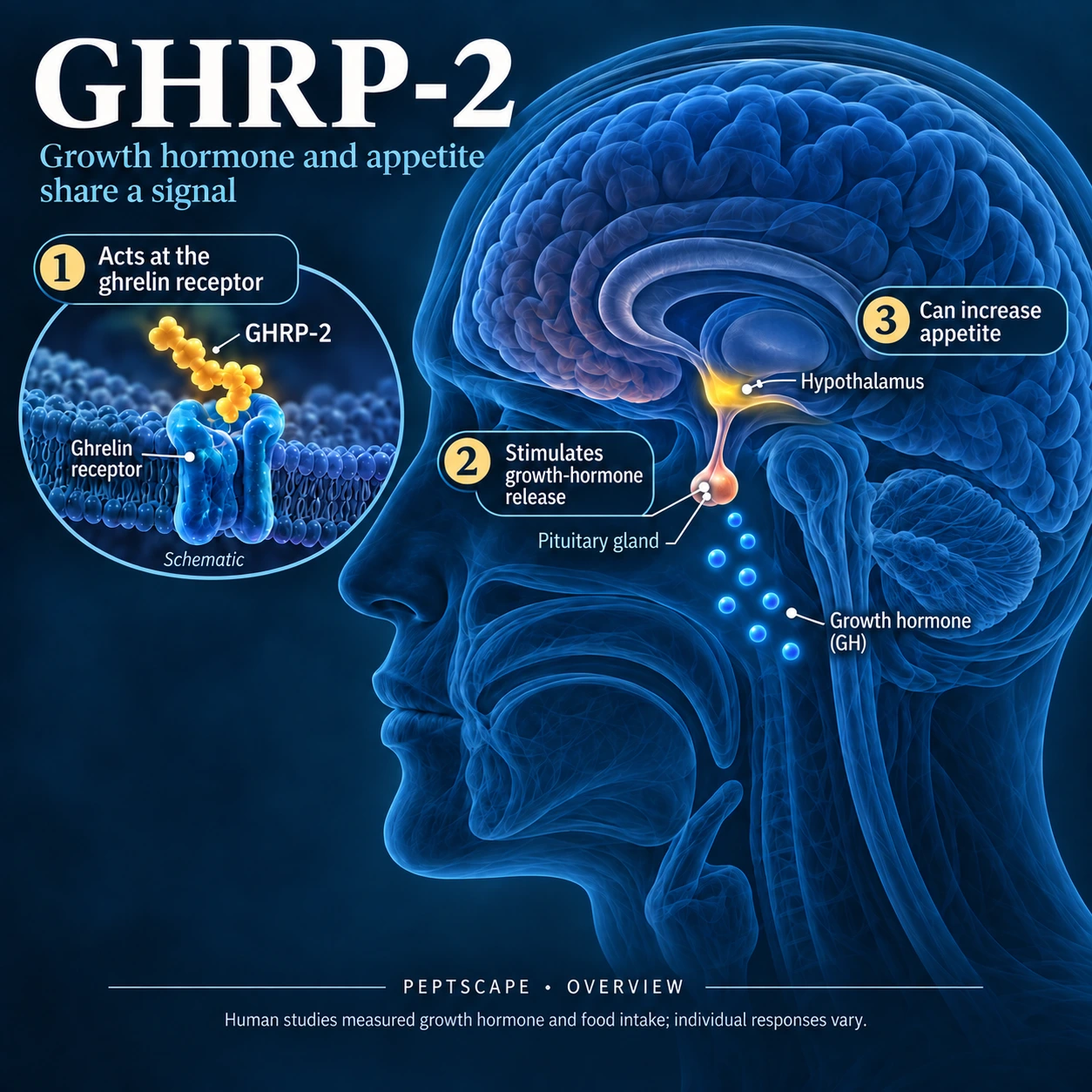
GHRP-2 is a synthetic peptide that stimulates the ghrelin receptor, a receiving point involved in growth hormone release and appetite. It is not growth hormone itself. It differs from GHRH-type peptides, which ask the pituitary to release growth hormone through another receptor system.
The wider picture
Growth hormone is released by the pituitary, a small gland beneath the brain. Release normally comes in pulses rather than as a constant stream. Growth hormone then influences several tissues and stimulates production of IGF-1, another growth-related signal. Asking the pituitary to release growth hormone is different from injecting growth hormone itself. It also requires a pituitary capable of responding.
Growth hormone and testosterone are different hormones. Both can influence body composition, but they act through different receptors and are assessed differently. A growth hormone-related peptide does not automatically correct low testosterone, and a body-composition complaint does not identify which hormonal system, if any, needs treatment.
What it is used for
The main experimental uses concern the growth hormone response, appetite and body composition. Appetite stimulation can be relevant to inadequate intake, but it can also work against a fat-loss goal. A bigger meal or an increase in body weight should not be assumed to represent new muscle. Hormonal effects outside growth hormone also deserve attention.
Understanding the intended benefit
Interest in this pathway includes body composition, recovery and the effects of ageing. Those goals need to be separated from treatment of a diagnosed hormone deficiency. More circulating growth hormone does not automatically mean more strength, better sleep or faster healing. Changes in body weight may include fluid retention. Swelling, hand tingling, joint discomfort and changes in glucose control should not be mistaken for useful muscle growth.
IGF-1 is often discussed alongside growth hormone because it reflects part of the downstream response. It is not a direct measurement of the strength of every growth hormone pulse. Age, nutritional status, liver function and other conditions can influence interpretation. Chasing the highest possible number is not the same as finding a useful and appropriate physiological response.
How it works
Ghrelin-related signalling links the digestive system and brain with pituitary responses. GHRP-2 can stimulate release through this network, while the existing feedback system still influences the result. It should not be grouped with ipamorelin as if every ghrelin-receptor peptide had identical selectivity, appetite effects or hormonal spillover.
The biology in plain language
The pathway has feedback controls. The brain helps regulate pituitary release, and signals from downstream tissues influence the next response. Sleep, meals, age, illness and other hormones all affect this system. A single laboratory value therefore needs context. The timing of a blood sample and whether the test measures growth hormone or IGF-1 matter. The two measurements describe different parts of the same network and cannot be substituted for one another.
Recovery includes repair of tissue, replenishment of fuel and recovery from fatigue. Sleep and sufficient nutrition support these processes, while progressive rehabilitation supplies the loading needed for injured tissue to regain function. A hormone-related intervention does not replace those distinct inputs. A peptide stack with several agents acting on the same release pathway may also duplicate effects rather than provide separate benefits.