Identity
GDF-8, or myostatin, is a negative regulator of skeletal-muscle growth.
Selected study only; not a complete clinical review.
Peptide library
Your guide to this compound.
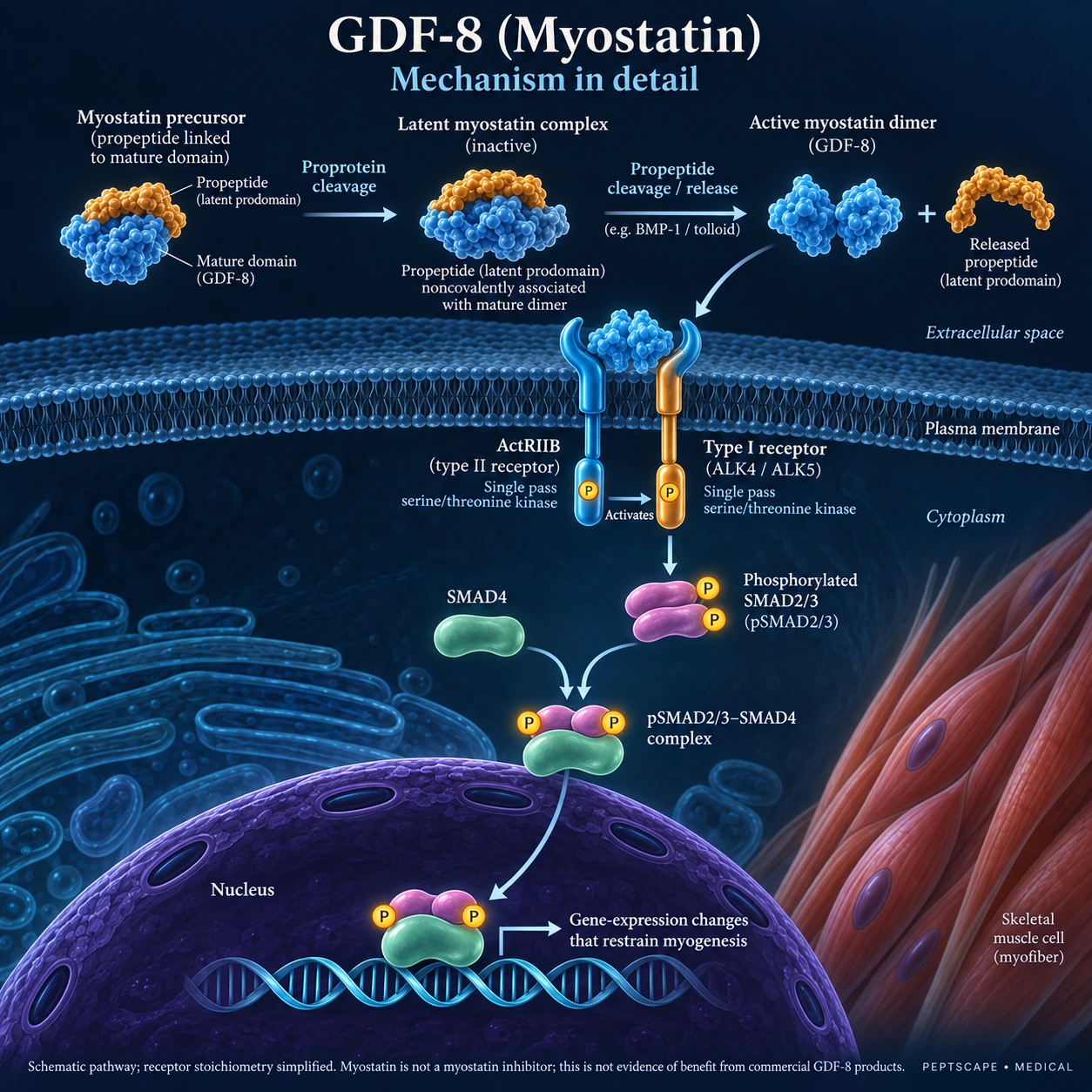
Deleting or blocking myostatin is biologically different from administering myostatin. The knockout experiment supports a regulatory mechanism, not a muscle-growth benefit from buying GDF-8 itself.
Existing source snapshot critically reassessed.
Based on the selected source scope described in this profile, often an indexed abstract. Full methods and clinician sign-off remain pending; no systematic-review claim.
Editorial assessment · 2026-09-07
Mice with experimental disruption of the GDF-8 gene.
Gene deletion increased muscle mass. Removing myostatin activity is different from administering myostatin itself.
Current authorization for the exact product and jurisdiction was not independently checked in this snapshot. A clinical trial is not marketing authorization.
Selected indexed primary-study abstract reviewed. Full methods, bias, all safety outcomes, product stability, current jurisdictional authorization and a comprehensive literature search remain outstanding. This is not a complete clinical review.
GDF-8, or myostatin, is a negative regulator of skeletal-muscle growth.
The study-specific findings below distinguish biological activity from demonstrated treatment benefit.
The catalog primarily cites laboratory or animal research. Human benefit, a safe dose and long-term risks cannot be inferred from those findings.
Selected study only; not a complete clinical review.
The catalog primarily cites laboratory or animal research. Human benefit, a safe dose and long-term risks cannot be inferred from those findings.
GDF-8, or myostatin, is a negative regulator of skeletal-muscle growth.
Selected study only; not a complete clinical review.
Gene deletion increased muscle mass. Removing myostatin activity is different from administering myostatin itself.
Selected study only; not a complete clinical review.
This gene-disruption experiment supplies no human administration safety data.
Selected study only; not a complete clinical review.
Regulation of skeletal muscle mass in mice by a new TGF-beta superfamily member. 1997.
PMID: 9139826
Catalog review date: Sep 7, 2026. This date alone does not establish independent clinical review.