Peptide library
BAM15
Your guide to this compound.
Evidence in perspective
Mouse obesity and cellular uncoupling findings do not establish a safe human therapeutic window. A mitochondrial mechanism is not evidence of clinical weight loss or a suitable supplement regimen.
About this assessment
Existing source snapshot critically reassessed.
Based on the selected source scope described in this profile, often an indexed abstract. Full methods and clinician sign-off remain pending; no systematic-review claim.
Editorial assessment · 2026-09-07
Who was studied
Cells and mouse models, including diet-induced obesity.
What the sources found
Mouse studies reported metabolic effects and reduced diet-induced obesity.
What remains unknown
Animal tolerance and efficacy do not establish human safety. This is not an approved weight-loss product profile.
How it works
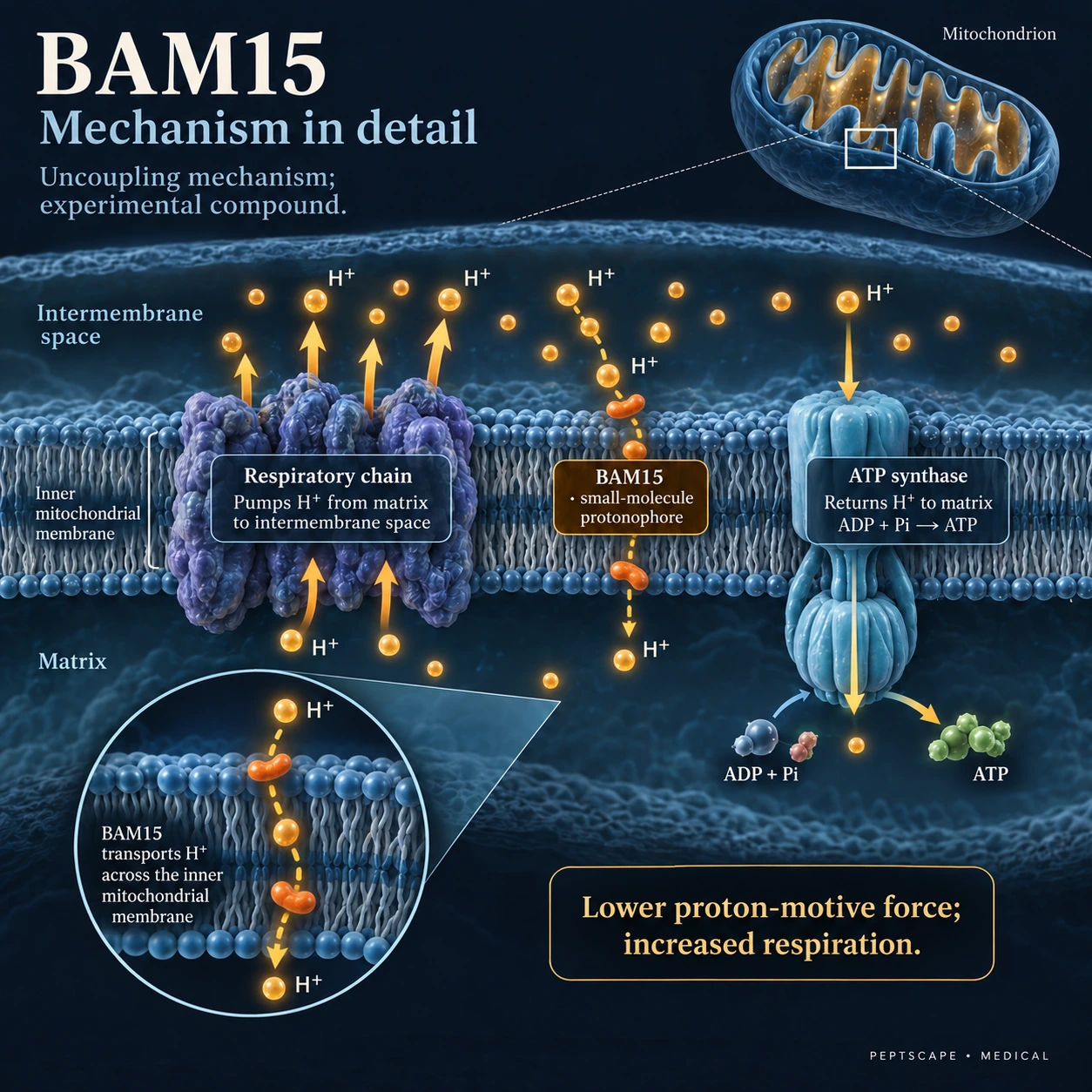
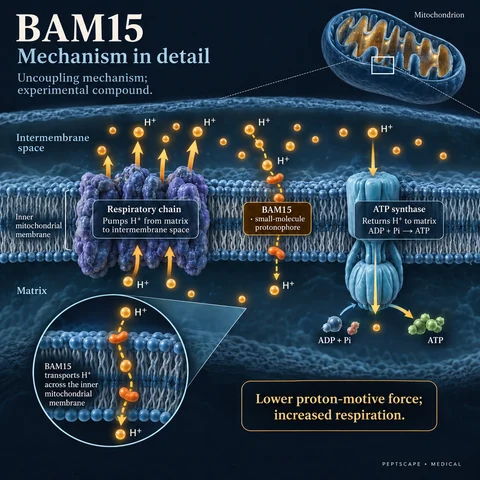
Uncouples mitochondrial respiration from ATP production.
Uncouples mitochondrial respiration from ATP production. Animal tolerance and efficacy do not establish human safety. This is not an approved weight-loss product profile.
Preclinical research
The catalog primarily cites laboratory or animal research. Human benefit, a safe dose and long-term risks cannot be inferred from those findings.
Reported adverse effects
- Safety details remain incomplete in this snapshot; absence of a listed effect does not mean it was excluded.
Contraindications
- This snapshot is not a complete contraindication or interaction review.
Preclinical research
The catalog primarily cites laboratory or animal research. Human benefit, a safe dose and long-term risks cannot be inferred from those findings.
Sources used for this snapshot
References
Primary publication · PMID 24634817
PMID: 24634817
Primary publication · PMID 32409697
PMID: 32409697
Catalog review date: Sep 6, 2026. This date alone does not establish independent clinical review.